
Our People, Our Standards, Wherever They Work
 5 Oct 20264 Minutes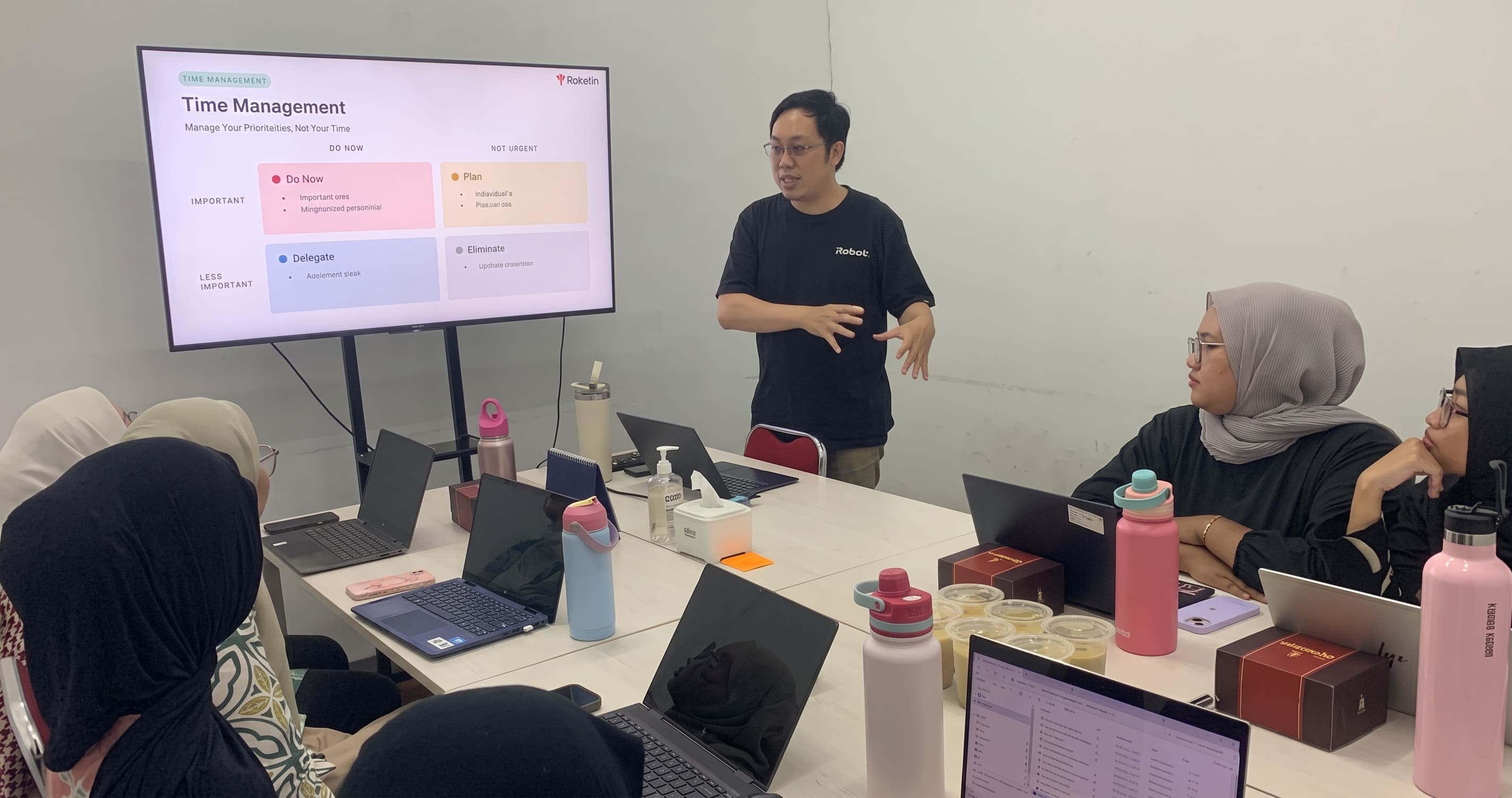
At Roketin, our responsibility to our people doesn't end the moment they start their first day on the job. Sometimes, it means stepping back in later, long after a placement has begun, to make sure the standard we hold ourselves to is still showing up in their everyday work.
That's exactly what happened recently, when one of our team members, placed to work within a client company's administration team, sat down for a dedicated training session led by our own CEO, Tony Darmasaputra. The session was held right at the Roketin office, away from the day to day pace of the placement itself, giving both the trainer and the trainee room to slow down and really dig into how the work was going.
Why Training Doesn't Stop After Placement
It's easy to assume that once someone is placed and settled into a role, the hard part is over. In our experience, that's rarely true. The early weeks on a new assignment often reveal gaps that weren't obvious during onboarding, small habits, shortcuts, or misunderstandings that only surface once the work is actually underway.
That's part of why our CEO chose to lead this session personally. Having our CEO sit across the table, walking through real situations our team member had already encountered, sends a message that's hard to replicate through a written guideline or a one time briefing. It tells our people that the standard isn't something we set once and forget. It's something we keep checking in on, even after someone has been doing the job for a while.
The session wasn't built around a fixed checklist. Instead, it worked backward from real moments on the job, situations where a decision had to be made, a process had to be followed, or a judgment call came up without anyone from Roketin in the room to weigh in. From there, we walked through not just what the right call would have been, but why, helping our team member build the kind of instinct that holds up even without constant supervision.
What Makes These Conversations Different From a Manual
A written guideline can tell someone what the standard is. It rarely explains why the standard exists, and it almost never adjusts to whatever specific situation someone is actually facing that week.
That's the gap a session like this is meant to close. Rather than handing over another document to read, our approach was to ask questions first. What's been coming up. What felt unclear in the moment. What decision had to be made without anyone from Roketin around to weigh in. The answers shaped the direction of the conversation more than any prepared material did.
There's also something in the format itself that a document can't replicate. When a company's CEO sets aside time to sit down and walk through the details of someone's day to day work, it says something about how seriously that work is taken, something that's hard to convey through a memo, no matter how well written.
How One Session Shapes the Next
What comes up in a session like this rarely stays contained to the one conversation. A recurring point of confusion, a judgment call that kept getting made the hard way, a question that surfaces more than once across different placements, these patterns become information Roketin carries forward.
That information shapes how the next person is prepared before they're placed, and how future check ins are structured once they are. It's part of why we don't treat a single training session as the end of the process. Each one tends to reveal something that makes the next one, and the next placement, a little sharper.
What This Says About How We Work
We've always believed that quality shouldn't shrink the moment someone steps outside our office, and it shouldn't fade just because enough time has passed since onboarding. If anything, the standard matters more once the initial excitement of a new placement settles into routine, because that's when old habits are most likely to creep back in.
This is part of a broader pattern at Roketin. We don't treat placement as a handoff we can walk away from. When our people take on roles embedded within a client company's team, we stay involved, checking in, correcting course when needed, and yes, sometimes bringing our CEO into the room to make sure the message lands.
It's a small detail, but it says something bigger about how we think about our work. The standard doesn't change just because the address does, and it doesn't fade just because time has passed since someone first walked through the door.